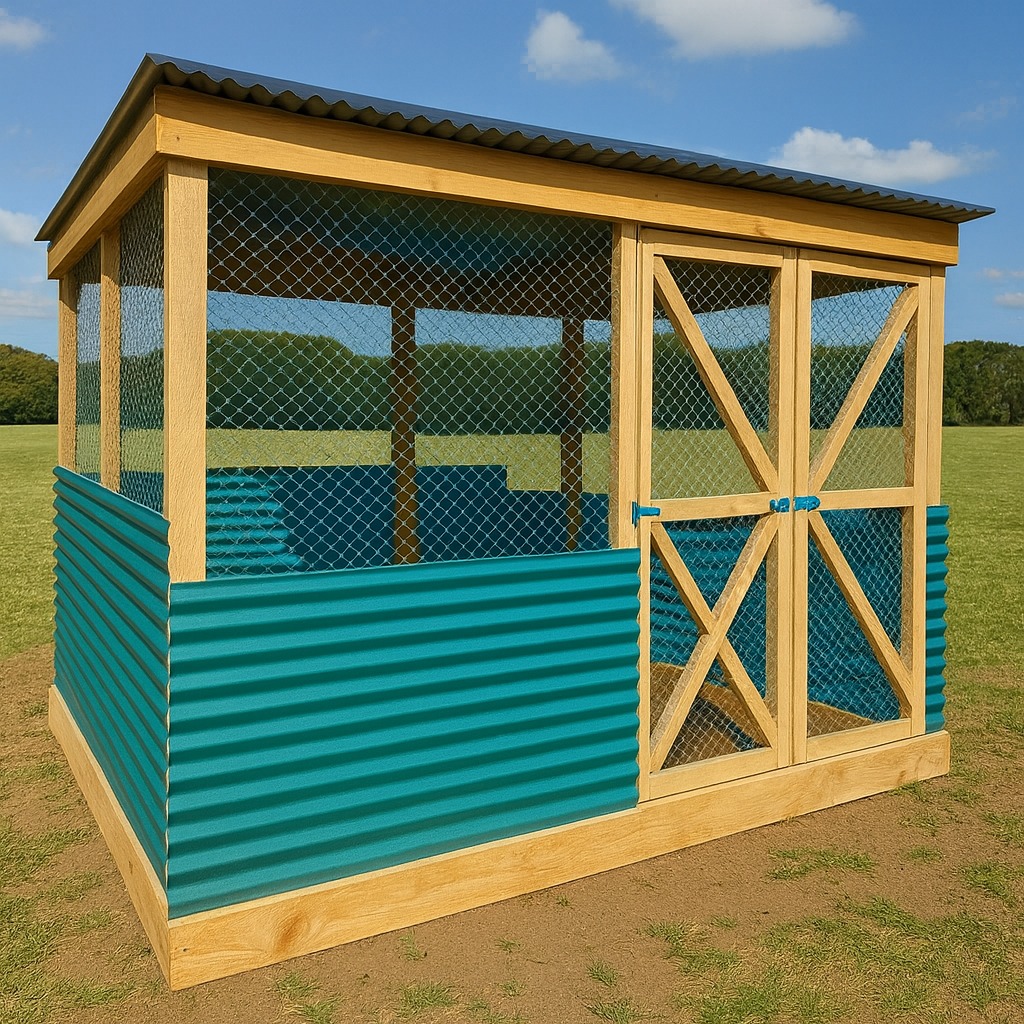
5. Use Protective Mesh
Install fine chicken wire mesh to keep out predators like wild birds, dogs, and rodents.
Plastic-coated mesh enhances durability and ease of maintenance.
6. Install a Suitable Roof
Use reflective roofing materials to deflect heat and incorporate a proper slope for airflow.
Maintain sufficient height between birds and roof to prevent overheating.
7. Select the Right Flooring
Opt for floors that are easy to clean and disinfect, supporting overall hygiene and disease prevention.
8. Implement Hygiene Controls
Set up a disinfectant footbath at the entrance.
Keep the area surrounding the pen free of vegetation to discourage rodents, and store feed in a separate, secure building.
9. Choose a Quiet, Isolated Location
Construct your poultry house away from busy or contaminated areas to reduce the risk of disease.
10. Manage Airflow Wisely
Regulate ventilation depending on the season.
Keep curtains open for cool airflow in warm months and closed during colder periods to retain heat.
11. Maintain Security
Erect a fence around the house and keep doors locked to deter intruders, stray animals, and unauthorized visitors.
By carefully planning and constructing your poultry house with these considerations, you create an environment where your birds can thrive, and your business can grow.
