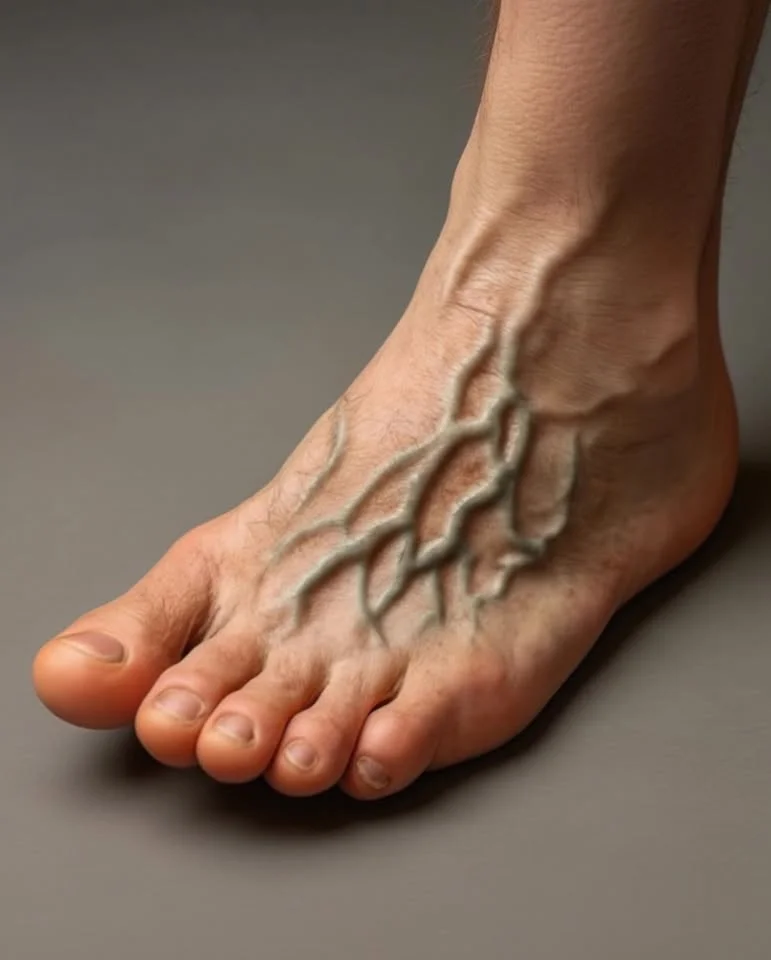
A feeling of heaviness or tiredness in your legs
Swelling around ankles or calves
Cramping or tingling sensations
Itching or dark discoloration near the affected areas
These are often early indicators of poor venous circulation and should not be overlooked.
Natural Ways to Support Healthy Veins
Move Regularly: Light exercise such as walking, stretching, or yoga improves blood flow and strengthens veins.
Elevate Your Legs: Lifting your legs above heart level for 10–15 minutes helps reduce swelling and pressure.
Wear Compression Stockings: They gently squeeze your legs, supporting vein function and preventing blood from pooling.
Eat Vein-Strengthening Foods: Blueberries, citrus fruits, garlic, and leafy greens are rich in antioxidants that support healthy circulation.
Stay Hydrated: Water keeps your blood flowing smoothly and prevents thickening, which can strain veins.
When to See a Doctor
If the veins become painful, swollen, or warm to the touch, it may signal a more serious condition, such as thrombophlebitis (vein inflammation) or a circulation disorder. In these cases, consult a healthcare professional or vascular specialist immediately.
Final Thoughts
Visible veins might seem like a simple cosmetic issue, but they can be your body’s way of asking for better circulation and care. With lifestyle changes, proper nutrition, and attention to early warning signs, you can protect your veins and keep your legs healthy and strong — no matter your age. 💪🩵
