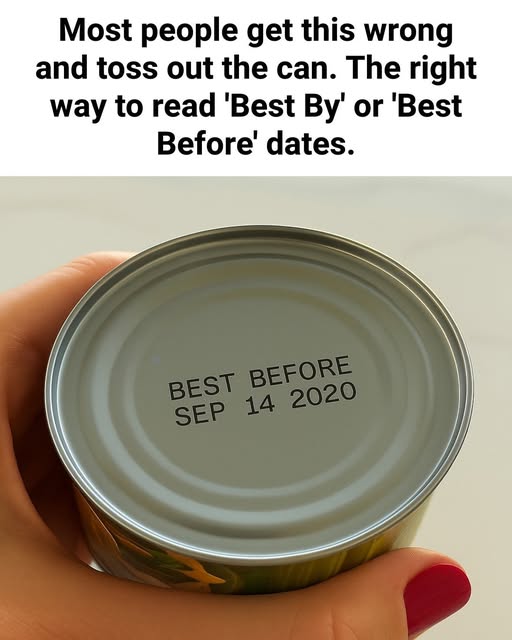
Hidden behind jars of pasta sauce and bags of rice, most pantries have a few forgotten cans — maybe beans, soup, or vegetables pushed to the back and left for years. When people finally find them, their instinct is usually to check the printed date. Seeing that it’s long expired, they toss it immediately. But in truth, most “expired” canned foods are still safe to eat. The dates printed on those labels rarely mean what people think they do — and understanding that difference can save money, reduce waste, and maybe even challenge a few long-held kitchen myths.
The Real Meaning Behind Expiration Dates
Food labeling is confusing by design. Terms like “Best By,” “Best Before,” and “Use By” aren’t standardized expiration dates but manufacturer recommendations about peak quality.
“Best By” or “Best Before” indicates the period when the product tastes and looks its best. After that date, the flavor or texture might decline slightly, but it’s still safe to eat.
“Use By” is generally reserved for perishable items like milk, deli meat, or fresh juices, where spoilage can happen faster. Even then, it’s about quality, not necessarily safety.
In the case of canned goods, these labels serve more as marketing tools than warnings. Canned food doesn’t suddenly become dangerous the day after its printed date. In fact, according to the U.S. Department of Agriculture (USDA), properly stored canned food can remain safe for decades — sometimes indefinitely.
The Science of Longevity
The secret to a can’s remarkable lifespan lies in the preservation process. Canned food is cooked inside its sealed container at high temperatures, killing bacteria and creating a vacuum that prevents new microorganisms from entering. As long as that seal remains intact, the food is protected from spoilage and contamination.
Storage conditions are what truly determine how long canned goods last. A can kept in a cool, dry, dark place — ideally below 85°F (29°C) — can outlast its label by years. Heat and humidity are the real enemies. They can corrode the metal, compromise the seal, and slowly degrade the food inside.
Different types of canned foods age differently:
High-acid foods (like tomatoes, tomato sauce, pineapple, or citrus fruits) last around 12–18 months. Their natural acidity helps inhibit bacteria but can gradually wear down the can’s lining.
Low-acid foods (such as beans, corn, peas, carrots, potatoes, and canned meats) can last three to five years — sometimes longer — without losing much quality.
If stored properly, even cans sitting quietly in your pantry for a decade can remain edible.
When “Expired” Doesn’t Mean Unsafe
Let’s be clear — just because a can is past its printed date doesn’t mean it’s gone bad. That date is about optimal quality, not a biological countdown. If the can looks normal — no rust, bulging, dents, or leaks — chances are the food inside is still fine.
When you open an older can, use your senses:
Look — The food should still resemble its original color and texture.
Smell — Any sour, rancid, or metallic odor means toss it.
Taste (carefully) — If it smells and looks fine, try a small amount. A metallic or “off” flavor means it’s better to discard it.
Most canned goods past their “Best By” date are perfectly safe, but the texture or taste might have dulled slightly. Green beans may lose crispness, and soup might taste less vibrant — but they’re still nutritious and edible.
