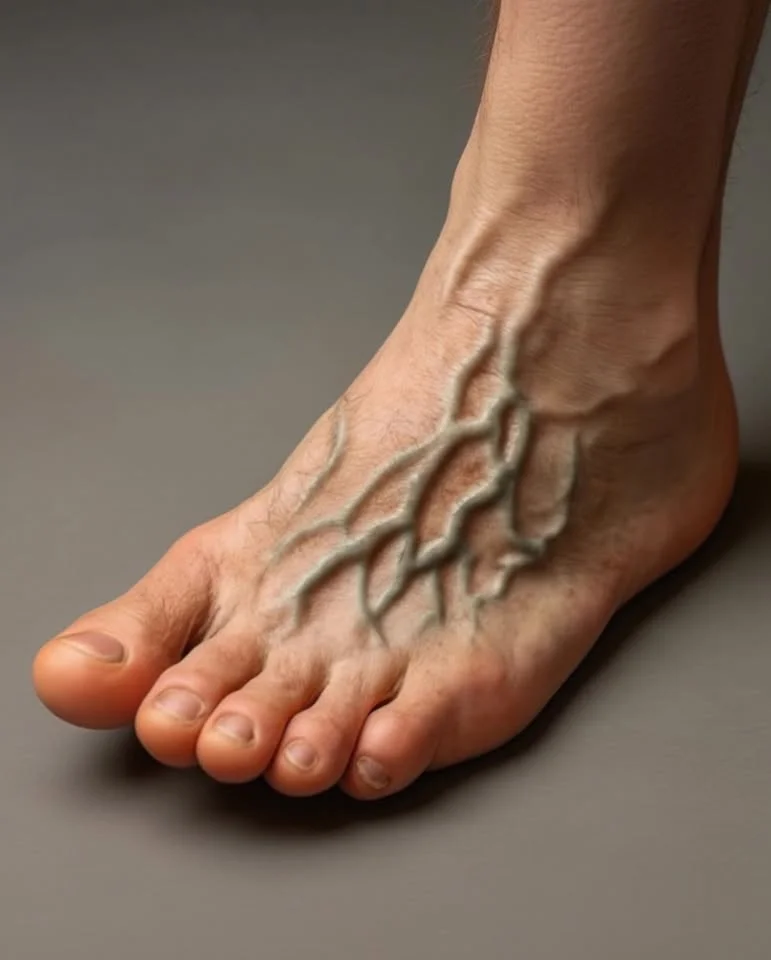
Many people notice small blue or purple veins appearing on their legs, ankles, or even hands as they get older. Often dismissed as just a sign of aging, recent medical research reveals that these visible veins — commonly known as varicose veins or spider veins — can actually be linked to deeper health issues related to blood flow, lifestyle, and even hormonal balance.
What Recent Studies Have Found
According to recent research published in medical journals on vascular health, varicose and spider veins develop when the valves inside your veins weaken or become damaged. These tiny valves are responsible for pushing blood back toward your heart. When they fail to close properly, blood begins to pool in certain areas — especially in the legs where gravity makes circulation harder.
But scientists now believe age isn’t the only factor. Other causes include:
Genetics: If your parents or grandparents had varicose veins, your risk increases significantly.
Hormonal changes: Pregnancy, menopause, or the use of birth control pills can affect vein elasticity.
Long periods of sitting or standing: Jobs that keep you still for long hours — like office work, teaching, or retail — put extra pressure on leg veins.
Obesity: Extra body weight adds strain to your lower body, slowing blood return to the heart.
Circulatory problems or inflammation: Poor cardiovascular health or chronic inflammation can damage vein walls over time.
Early Symptoms You Shouldn’t Ignore
Before veins become visible, your body often sends subtle warning signs such as:
